 |
 | 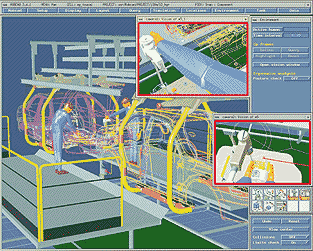 |
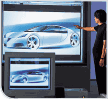
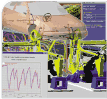
Mazda Digital Innovation (MDI), a cutting-edge 3D information technology system, has dramatically improved the quality and efficiency of vehicle development and manufacturing processes.
Through MDI, designers make sure parts fit in the allotted space and that they can be assembled with ease on the computer screen before they build the actual production model. In what we call our “digital factory,” engineers simulate machining, assembling and other operations to check the suitability of these processes.
In 2000, Mazda introduced a wide range of virtual testing and upgraded Phase 1 and 2 to reduce vehicle development time after design freeze for all-new models from 18 months to 14 months on average. In some cases |
|
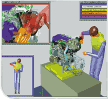
depending on the model, we will reduce development times even further. Virtual tests are conducted at the planning and designing stages of vehicle development before building prototype cars and cover all major areas such as durability, crash worthiness, handling stability, and NVH (Noise, Vibration and Harshness). We will also use virtual tests to prove quality of such major components as engines, transmissions and suspensions. With these virtual tests, we will be able to reduce the number of prototype cars by 30% and testing time by 50%.
Mazda will also accelerate concurrent engineering within the company and with the Ford Group and overseas suppliers through the Product Information Management (PIM) system. Using the PIM, Mazda digitizes all information required for product development and product engineering, making this virtual information available to all who need it.
To improve business efficiency with suppliers and ehance thier strengths, Mazda introduced the Mazda Full Service Supplier (FSS) system. This new system involves parts suppliers in the development processes from earlier stages and clarifies their roles and responsibilities, eliminating duplication and using their know-how as specialists in their respective fields.Also, FSS will help Mazda develop and build products with strong appeal while enhancing quality and lowering cost. With the FSS system suppliers will focus on interior and exterior components and chassis parts, allowing Mazda people to concentrate on other major components such as engines, transmissions and platforms. Approximately 200 parts suppliers had applied and had been approved for FSS certification by March.
In June 2000, Mazda launched the “Mazda Supplier Network (MSN)”-an interactive website to improve the flow of information to and from 350 parts suppliers. We plan to connect MSN to the Japan Automotive Network Exchange, an Internet-based industry information resource scheduled for launch in October 2000. As a result, MSN will dramatically enhance procurement processes.
We also remain focused on improving product quality and enhancing customer satisfaction. Under our “Long-Term Quality Improvement Plan” established in 1998, we are building a sound infrastructure, upgrading accredited quality systems and processes and setting up a quality assurance system for development and production processes. |
|
     |
|
| To meet changing customer needs quickly and flexibly, MDI serves as a core competency for Mazda's product development. During the year, we have further upgraded this cutting-edge 3D information system and introduced virtual tests into the overall development process. These will further reduce development time and costs, ensure overall product quality and enhance customer satisfaction. |
|
 |
|
|



