ブックタイトルマツダ技報 2013 No.31
- ページ
- 187/228
このページは マツダ技報 2013 No.31 の電子ブックに掲載されている187ページの概要です。
秒後に電子ブックの対象ページへ移動します。
「ブックを開く」ボタンをクリックすると今すぐブックを開きます。
このページは マツダ技報 2013 No.31 の電子ブックに掲載されている187ページの概要です。
秒後に電子ブックの対象ページへ移動します。
「ブックを開く」ボタンをクリックすると今すぐブックを開きます。
マツダ技報 2013 No.31
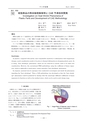
マツダ技報No.31(2013)論文・解説32樹脂部品の熱収縮現象解明とCAE予測技術開発Investigation on Heat Shrink Phenomena ofPlastic Parts and Development of CAE Methodology要約井上実*1平本健治*2高田幸次*3Minoru InoueKenji HiramotoKouji Takata藤和久*4*5西村賢治Kazuhisa ToKenji Nishimura樹脂は金属と比べて温度変化に伴う変形現象が顕著に見られるため,樹脂部品設計において熱変形への配慮が不可欠である。この際,樹脂では金属では見られない「熱収縮」という現象を考慮しなければならないが,従来からの線膨張係数による熱応力解析では「熱収縮」現象は再現できなかった。そこでまず樹脂の材料試験を実施し「熱収縮」現象や発生しやすい条件等を明らかにした。そして線膨張係数について異方性を有し昇温時と室温戻し時では別経路の関数表現を採用するとともに,加えて部品製造時の残留応力を考慮することによって,簡易かつ開発の早期段階でも適用可能な「熱収縮」現象を予測できるCAE技術を開発した。SummaryAs plastics, compared with metals, show remarkable sensitivity to deformation with temperaturechanges, much consideration needs to be given to thermal deformation in designing plastic parts. Inso doing, "heat shrinkage" phenomena, which are not observed in metals, need to be taken intoconsideration. However, the conventional FEM methodology using the coefficient of linear expansion,which is applicable to metal parts, cannot reproduce "heat shrinkage" phenomena.In response, material tests by specimen were conducted to investigate and clarify the phenomenaregarding the "heat shrinkage". Then a CAE methodology was developed so that the "heat shrinkage"phenomena could be predicted by dealing with the anisotropic different coefficients of linearexpansion by function as well as the residual stress, which can be used in early design stage.1.はじめに自動車において樹脂は金属と並ぶ中心的構成材料である。射出成形により自由な形状を短時間・安価に製造でき,比重が1程度と低い点などから,内外装領域においてポリプロピレンを中心とする樹脂が広く活用されている。Fig. 1には代表的な乗用車における内外装部品の構成重量比率を示す。樹脂類は約半分の46%を占めている。近年の環境・省資源の観点から,金属から樹脂への置換や樹脂部品の最適化による軽量化は,今後も一層重要性を増している。Weight Ratio of Material Used inInterior & Exterior ComponentsFabrics,Felt, Lether11%Others12%Plastics,Urethane46%Metal31%Fig. 1 Weight Ratio of Materials Used in Interior &Exterior Components*1,3,5装備開発部Interior & Exterior Components Development Dept.*2,4技術研究所Technical Research Center―180―